The Cannibal and the Traveler:
Francophone Travelers and the Colonization of the African Continent
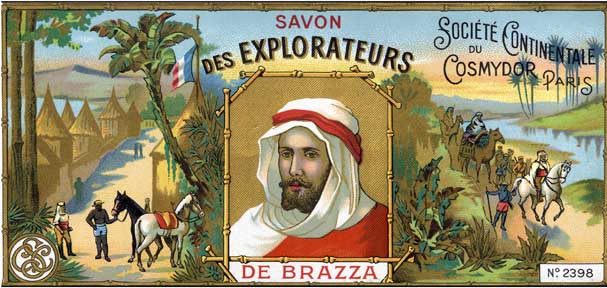
©bianchetti/Leemage
Professor Anne-Caroline Sieffert
Office Hours : TBA
Course description :
This class invites you to explore the discovery and subsequent colonial conquest of Africa through the eyes of French travelers. From the 1850s to the 1950s, France extended its colonial empire through a second wave of colonization. In this class, we will examine the way in which travel literature was used as a propaganda tool to sustain the colonial Empire. The frenetic and commercial use of male–and female–travelers image in France and their popularity contributed to the idea that France was helping educate Africa by colonizing it. This begs the question: can we be travelers without destroying? Is there an alternative to exoticism? How do we monetize travel through exoticism? What is the relationship between masculinity, femininity and colonialism?
To answer these questions, and articulate the relationship between race, citizenship, gender and power, we will read adventure novels, a genre particularly popular in France at the turn of the century; travel journals; graphic novels and comic books; and finally we will watch early twentieth century movies on French explorers to see how they were used as a commercial tool.
This class will be divided in 5 units: the first examines Orientalism in France (Pierre Loti, Gustave Flaubert, Eugène Delacroix). The second will study reimagined masculinities in African explorers (Jules Verne, Brazza ou l’épopée du Congo, Hergé). The third will show the role of women in colonization (Jane Dieulafoy, Isabelle Eberhardt). And finally, the last unit will examine the administration of Africa and the disillusion of colonization (André Gide, Joseph Conrad, Michel Leiris).
Goals of the class
This class will teach you how to :
- Read hybrid and unusual sources such as travel journals, comic books, movies, and adventure novels.
- Gather critical and historical information on the period.
- Understand how subjectivity is built and denied to non-White, non-European populations.
- Use the tool of gender studies to understand relationships of power and the articulation of public and private spaces.
- Gain knowledge that is relevant and useful in understanding France’s identity in the 21st century.
- Write critical essays and prepare presentations for the class.
Grading and participation
Your final grade will be divided as follow:
-Participation and blog: 25%.
-Essays: 40%: for this class, you will write two essays, whose subjects will be discussed with me. Those essays will be 6 pages maximum, written in MLA style, Times New Roman 12, double-spaced and justified.
-A group work, 20%: This will be a creative work on travelers. As you will discover in class, a huge part of the travelers’ mystique during the colonial era revolves around visual material, adventure novels and travel journals. Your group will work collectively on a project that can be of any type of creative medium: comic book, short film/documentary, illustrated travel journal, etc.
-A class presentation, 15%: to develop your oral skills, you will present one particular aspect of travelers’ history, with subjects given during the first class. This presentation will either be of a historical subject or on a particular text or source used in class.
Texts for class
These are available at the bookstore :
-Hergé. Tintin in Congo.
-Gide, André. Travel to the Congo.
-Verne, Jules. Five weeks in a balloon.
 Mysteries of Africa by Anne-Caroline Sieffert is licensed under a Creative Commons Attribution-NonCommercial-ShareAlike 4.0 International License.
 The Traveling Scholar | AC Sieffert, PhD
Leave a comment